

There is something special about lighting a candle after a long day. The soft glow, the comforting fragrance, and the peaceful atmosphere can instantly transform your mood. While candles are easily available in stores, many people are now discovering the joy of making candles at home.
Candle making is not only a creative hobby but also a relaxing activity that allows you to create something beautiful with your own hands. You can customize the fragrance, color, shape, and style according to your personal preferences. Whether you want elegant candles for home décor, scented candles for relaxation, or handmade gifts for loved ones, learning how to make candles at home is a skill worth mastering.
In this complete guide, we will walk you through everything you need to know about DIY candle making. From understanding different types of wax to troubleshooting common problems, this article covers every step in detail.
If you enjoy creating a calming ambiance, you can also explore our collection of ceramic aroma diffusers to enhance your aromatherapy experience. If making candles isn’t your preference, a tripod ceramic oil burner offers another simple way to enjoy your favorite fragrances.
Why Should You Make Candles at Home?
Before diving into the process, let’s understand why homemade candles have become so popular.
1. Creative Freedom
When you make candles yourself, you have complete control over how they look and smell. You can experiment with fragrances, colors, containers, and decorative elements.
2. Cost-Effective
Premium scented candles can be expensive. Making candles at home often costs much less, especially when you buy supplies in bulk.
3. Personalized Gifts
Handmade candles make thoughtful gifts for birthdays, weddings, festivals, anniversaries, and housewarming celebrations.
4. Eco-Friendly Choices
You can choose natural waxes such as soy or beeswax and avoid unnecessary chemicals.
5. Stress Relief
Many people find candle making therapeutic. The process requires focus and creativity, making it an enjoyable way to unwind.
Understanding the Basics of Candle Making
At its core, every candle has three essential components:
- Wax
- Wick
- Fragrance (optional)
When the wick burns, the heat melts the wax, which then fuels the flame.
Understanding these elements helps you create candles that burn safely and efficiently.
Different Types of Candle Wax
Choosing the right wax is one of the most important decisions in candle making.
Soy Wax
Soy wax is made from soybean oil and has become a favorite among beginners.
Benefits:
- Natural and renewable
- Burns cleanly
- Produces less soot
- Easy to work with
- Excellent for container candles
Drawbacks:
- Slightly softer texture
- May develop frosting on the surface
Paraffin Wax
Paraffin wax is one of the most commonly used waxes worldwide.
Benefits:
- Affordable
- Excellent scent throw
- Widely available
- Smooth finish
Drawbacks:
- Petroleum-based
- Produces more soot than natural waxes
Beeswax
Beeswax is one of the oldest candle-making materials.
Benefits:
- Natural honey aroma
- Long burn time
- Minimal smoke
- Naturally purifies indoor air
Drawbacks:
- More expensive
- Harder to add fragrances
Coconut Wax
Coconut wax is gaining popularity in premium candles.
Benefits:
- Eco-friendly
- Smooth appearance
- Excellent fragrance performance
Drawbacks:
- Higher cost
- Less widely available
Candle Making Supplies You’ll Need
Gather all your materials before starting.
Ingredients
- Candle wax
- Candle wicks
- Fragrance oils
- Essential oils (optional)
- Candle dye (optional)
Equipment
- Double boiler
- Heatproof bowl
- Thermometer
- Measuring scale
- Stirring spoon
- Wick holders
- Candle jars or molds
- Scissors
- Paper towels
Having the right tools makes the process easier and safer.
How to make candles at home – Complete Guide
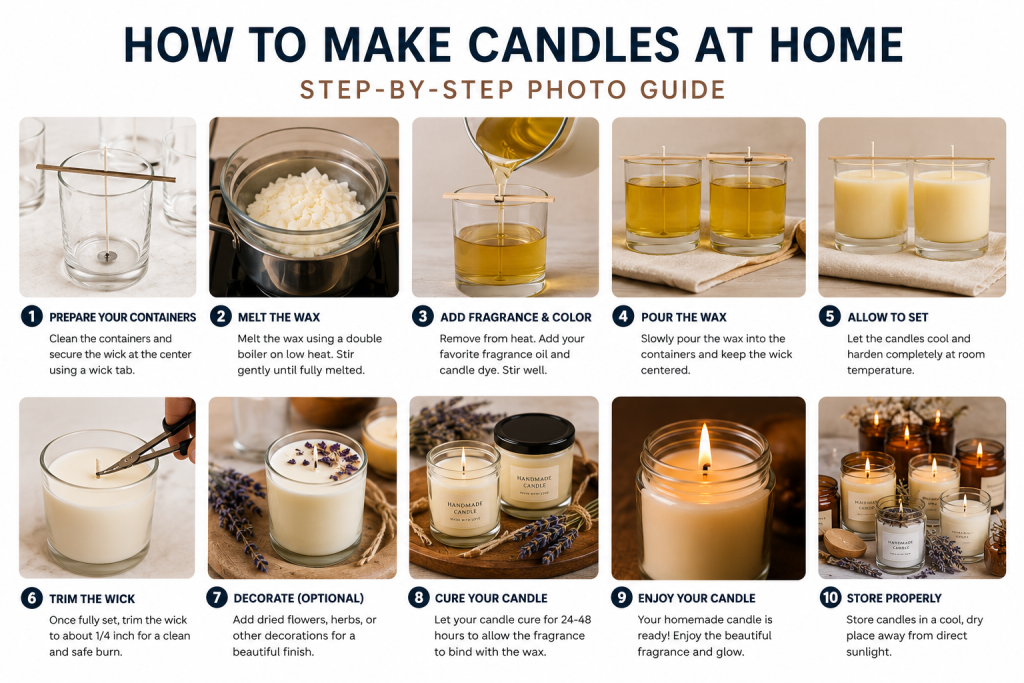
Step 1: Prepare Your Workspace
Choose a clean, clutter-free area with good ventilation.
Cover your work surface with newspapers or protective sheets to catch spills.
Keep children and pets away from the workspace.
Step 2: Measure the Wax
Estimate how much wax you need by filling your candle container with wax flakes.
Pour the flakes into a measuring cup and double the amount, as wax volume decreases when melted.
Step 3: Melt the Wax
Fill the bottom portion of a double boiler with water.
Place the wax in the top container and heat slowly.
Stir occasionally until fully melted.
Different waxes melt at different temperatures:
- Soy Wax: 75–85°C
- Paraffin Wax: 70–80°C
- Beeswax: 80–90°C
Never melt wax directly over an open flame.
Step 4: Attach the Wick
Secure the wick at the center of the container using:
- Wick stickers
- Glue dots
- Melted wax
Use wick holders or clothespins to keep the wick upright.
Step 5: Add Fragrance
Once the wax cools slightly, add fragrance oil.
Most candle makers use a fragrance load of 6–10%.
Stir gently for two minutes.
Popular fragrances include:
- Lavender
- Vanilla
- Ocean Breeze
- Jasmine
- Rose
- Sandalwood
- Citrus blends
- Eucalyptus
Step 6: Add Color (Optional)
Add candle dye according to the desired shade.
Start with a small amount.
Remember that melted wax appears darker than the final result.
Step 7: Pour the Wax
Slowly pour the wax into the prepared container.
Leave about half an inch of space at the top.
Avoid pouring too quickly to prevent air bubbles.
Step 8: Allow the Candle to Cool
Let the candle cool undisturbed.
Avoid placing it in the refrigerator.
Cooling times vary depending on size.
Most candles require several hours to harden completely.
Step 9: Trim the Wick
Trim the wick to approximately ¼ inch.
This helps ensure a cleaner, safer burn.
Step 10: Cure the Candle
Curing allows the fragrance to bind with the wax.
Recommended curing periods:
- Soy Wax: 1–2 weeks
- Paraffin Wax: 2–3 days
- Beeswax: 3–5 days
Patience improves scent performance significantly.
Different Types of Homemade Candles
Once you understand the basics, you can explore various candle styles.
Container Candles
Made in jars, tins, or ceramic containers.
Ideal for beginners.
Pillar Candles
Freestanding candles that require mold release techniques.
Tealight Candles
Small candles commonly used for decoration and oil burners.
Votive Candles
Compact candles designed for small holders.
Wax Melts
Fragrance pieces without wicks used in wax warmers.
How to Choose the Right Wick
Wick selection affects how a candle burns.
Factors include:
- Wax type
- Container diameter
- Fragrance load
- Dye usage
A wick that is too small causes tunneling.
A wick that is too large creates excessive flames and soot.
Testing is essential.
Common Candle Making Problems and Solutions
Tunneling
Problem:
Wax burns down the center.
Solution:
Use a larger wick.
Sinkholes
Problem:
Small holes form near the wick.
Solution:
Pour at the correct temperature and perform a second pour if needed.
Frosting
Problem:
White crystal patterns appear.
Solution:
Common with soy wax and mostly cosmetic.
Weak Fragrance Throw
Problem:
Scent is not strong.
Solution:
Use proper fragrance percentages and allow adequate curing time.
Cracks on the Surface
Problem:
Uneven tops.
Solution:
Cool candles slowly at room temperature.
Safety Tips for Candle Making
Safety should always come first.
- Never leave melting wax unattended.
- Use a thermometer.
- Avoid water contamination.
- Wear protective gloves if necessary.
- Keep a fire extinguisher nearby.
- Store fragrance oils safely.
- Use heat-resistant containers.
Decorating Homemade Candles
You can personalize your candles by adding:
- Custom labels
- Decorative jars
- Ribbons
- Dried botanicals (used externally)
- Gift boxes
- Seasonal themes
Decorative touches make homemade candles look professional.
Best Fragrance Combinations to Try
Experimenting with fragrance blending is part of the fun.
Relaxing Blend
- Lavender + Vanilla
Fresh Blend
- Ocean Breeze + Citrus
Floral Blend
- Rose + Jasmine
Cozy Blend
- Cinnamon + Vanilla
Spa Blend
- Eucalyptus + Peppermint
Keep notes so you can recreate your favorite combinations.
Benefits of Scented Candles
Scented candles offer more than fragrance.
They can help:
- Create a calming environment
- Improve mood
- Enhance meditation sessions
- Support relaxation routines
- Make spaces feel inviting
- Complement home décor
Many people use candles during yoga, reading, baths, or evening routines.
Frequently Asked Questions
Is candle making difficult?
No. Beginners can successfully make candles with simple tools and basic instructions.
What is the easiest wax for beginners?
Soy wax is widely considered the easiest option.
Can I use essential oils?
Yes, but ensure they are suitable for candle applications.
How long do homemade candles last?
Stored properly, they can maintain quality for several months.
Why should I cure soy candles?
Curing improves fragrance performance and overall burn quality.
Can I reuse old candle jars?
Yes. Clean them thoroughly and ensure they are heat resistant.
Final Thoughts
Learning how to make candles at home is both rewarding and enjoyable. It allows you to express your creativity, save money, and create products that bring warmth and comfort into everyday life.
The best part is that you do not need expensive equipment or years of experience to get started. With patience, practice, and a willingness to experiment, you can craft beautiful homemade candles that rival many store-bought options.
Whether you’re making a single candle for your bedroom or exploring a new hobby with family, candle making is a skill that offers endless possibilities.
So gather your supplies, choose your favorite fragrance, and begin your candle-making journey today. The first candle you create may not be perfect, but each one will teach you something new—and that’s part of the magic.